Articles recipes

Are You A Speculator Or An Investor?

Are You A Speculator Or An Investor?The difference between speculation and investment

What are the key differences in behaviour that help define the distinction between speculators and investors? What do your behaviours say about you?

Speculation has been defined as the assumption of risk in anticipation of gain. Compared to investing, it tends to be associated with higher risks and achieving quicker and larger gains. It generally involves a “bottom up” approach that treats each risk as separate and distinct. It includes elements of stock selection, market timing and forecasting.
Click Here To Read More

Don’t fall in love with your employer

Surely, I’m better off investing in my employer’s sharesDon’t fall in love with your employer

Many employees hold shares (and/or rights to buy shares) in their share market listed company employer. The interest may have been acquired as part of their remuneration package or as compensation for sale of a business to the employer. Or, perhaps, the employee was optimistic about the prospects for the employer and bought its shares as an investment.
Click Here To Read More

Have you protected your most valuable asset?

You insure your car, don’t you?Have you protected your most valuable asset?

Most people insure their motor vehicles, their homes and their home contents. These are valuable assets that, in the event of various catastrophes, they want to be able to replace or repair without significant financial loss.

But when it comes to what is many people’s most valuable asset – their ability to earn future income – they are woefully positioned to cope financially with catastrophe. Research completed in 2006 indicated that only 55% of Australian families had any life insurance, with an even lower 31% having income protection.
Click Here To Read More

Borrowing to Invest or Super?

I don’t want to lock my money into superBorrowing to Invest or Super?

Two alternative strategies that many investors consider are:

• borrowing to invest (i.e. entering into a gearing strategy), outside super; and
• increasing pre-tax contributions to super and investing in the superannuation environment.

Which is best? The comparison is not straightforward, but is often hijacked by raising the issue that your money is “locked away” in super. For those some years away from being able to access their super, this is often a compelling point in favour of gearing.
Click Here To Read More

Wealth Management: a risky business

Share and property investments are risky …Wealth Management: a risky business

Most people understand that the returns of growth investments (i.e. shares and property) fluctuate considerably. If they didn’t prior to the Global Financial Crisis, they most certainly have a better grasp of that now.

But most don’t really have a good understanding of the potential range of variation of returns, without anything particularly unusual happening. And nor do they appreciate how dramatically the pattern of returns can affect long term wealth outcomes.

We use the Australian share market experience of the 25 years to December 2009 to shed some light.
Click Here To Read More

Is your Investment Strategy personalised?

Knowledge of investments isn’t everything

The availability of investment news and information has been increasing over time. This has led to an improvement in most people’s understanding of general investment concepts. It has created the opportunity for many to choose to manage their own financial affairs.

Knowing “where” to invest your money is an important part of the financial management equation. However, by itself, it’s far from comprehensive in terms of an investment strategy.
Click Here To Read More

Is residential property a good investment?

The arguments in favour of residential property investment appear overwhelming

Housing prices remained reasonably firm through the worst of the “Global Financial Crisis” and have risen steadily over recent months. Many do-it-yourself investors, badly bruised by the battering taken by domestic and international sharemarkets, are seeing investment in residential property as a “safe” investment alternative.

The arguments in favour of residential property investment appear overwhelming and include:
Click Here To Read More

Forecasting the Market – Skill or Luck?

Forecasting the Market – Skill or Luck?How good is your crystal ball?

We’ve just been through (arguably) the worst share market downturn since 1929. We’ve also experienced a recovery that few predicted was possible at the start of 2009. Why were we not able to predict these events earlier and with more precision?

You may think it’s because you don’t have access to the information that the experts have. Yet most of the experts find successful predicting just as tough. While it was hard to ignore some of the apocalyptic predictions that were being thrown around during the depths of the downturn, acting on them would have proved very costly.

So, which predictions do you follow and which do you ignore? Or is there another way to manage your financial affairs.

Click Here To Read More

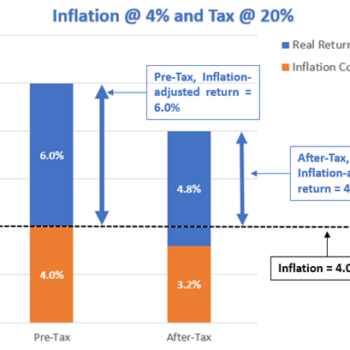
Taxes, investment costs and investment returns

Taxes, investment costs and investment returns High before tax returns may not be best …

If you accept the often repeated warning that past investment returns do not provide a guide to future performance, you would be smart enough to not select a fund manager based simply on their recent results.

But what if you knew for certain (which you couldn’t) that a particular investment manager would return 1% p.a. above their relevant market indicator, before investment costs and taxes, for the next 10 years. Would you select that manager in preference to one that guaranteed you the market return? As we demonstrate, not necessarily.

Your objective as an investor should be to maximise your investment returns after-tax, costs and inflation for the amount of risk you accept i.e. your net risk adjusted return. In this article, we will focus on the importance of taxes and investment costs (e.g. fund manager fees, transaction costs). We have discussed the risk issue extensively in our “Foundations of Financial Economics” articles and, excluding inflation indexed bonds, there is little an individual investor can do, directly, to take account of inflation.
Click Here To Read More

Is Rent Money, “Dead Money”?

Rent is the price of housing accommodation

The home building industry often promotes to potential young home buyers that rent money is “dead money” i.e. money down the drain. It encourages them to stop paying rent and, instead, use the money to pay off the mortgage on their own new home.

I became very aware of the power of this self serving message when my 24 year old daughter proclaimed that she wanted to buy her own property as soon as possible, as rent was “just dead money”. Although impressed by her determination to take on such an obligation, I couldn’t resist the opportunity to give a basic economics lesson.

The reality is that rent is not dead money but the cost of purchasing housing accommodation. It is essentially the same as paying for a hotel room for an overnight stay or for a two week vacation in a luxury holiday resort.

We all pay the cost of housing accommodation, whether we rent from a third party or we own our home. And this is the case, regardless of whether or not we have a mortgage.
Click Here To Read More