
Is your investment risk strategy paying off?

Is your investment risk strategy paying off?Are you an intelligent risk taker?

Most investors accept the notion that risk and return are related and that those who are prepared to take on more risk will ultimately get rewarded for their risk taking. As we’ve seen with the implosion of some investments during the GFC, increased risk taking does not always guarantee higher returns, it simply exposes you to the opportunity for higher returns.
Click Here To Read More

Understanding asset allocation

Understanding asset allocationAsset allocation: a measure of your investment risk

Our objective is to help clients become financially well organised and make smart financial choices so they have the best chance of enjoying the financial future they want. A key to achieving this objective is agreeing an appropriate investment risk exposure with each client and carefully managing that exposure over time. For us, this risk exposure is most appropriately measured by the client’s asset allocation.

This is the first in a series of four articles that explain our approach to asset allocation. Most people think they have a pretty good idea of what asset allocation is all about. Our experience suggests they don’t. While we start off pretty basically, we hope that by the final article you will agree that by viewing asset allocation in the lifelong context we advocate some conventional financial planning views are challenged and some smarter ways of thinking about personal finance issues emerge.
Click Here To Read More

“Timber”: Agribusiness Managers Felled

Diseased from the beginning …

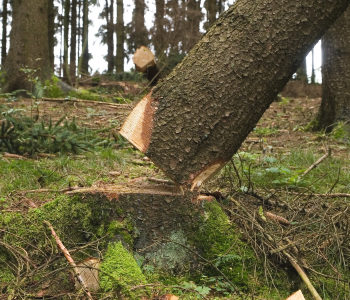
“Timber”: Agribusiness Managers FelledWithin a couple of weeks of each other in April and May, the two largest stock exchange listed managers of managed investment schemes (“MIS”), Timbercorp and Great Southern, went under. Most likely, shareholders will end up with nothing while creditors are almost certain to take a substantial haircut.

Timbercorp and Great Southern sold interests in agriculture based (or “agribusiness”) investment projects, particularly forestry plantations, to investors or “growers”.

While the “green” credentials of the projects were highlighted, the primary purchase motivation for investors was the large up-front tax benefits offered. The long term economic viability of the projects was always suspect, even more so now that their ongoing management is under a cloud.

Based on our wealth management principles, we think these projects and the decisions to invest in them were flawed from the start. It is a tragedy that there is now an estimated $6 billion of funds and 61,000 investors (see Footnote) caught up in a disaster that could have been avoided by applying a few tried and tested decision making fundamentals.
Click Here To Read More